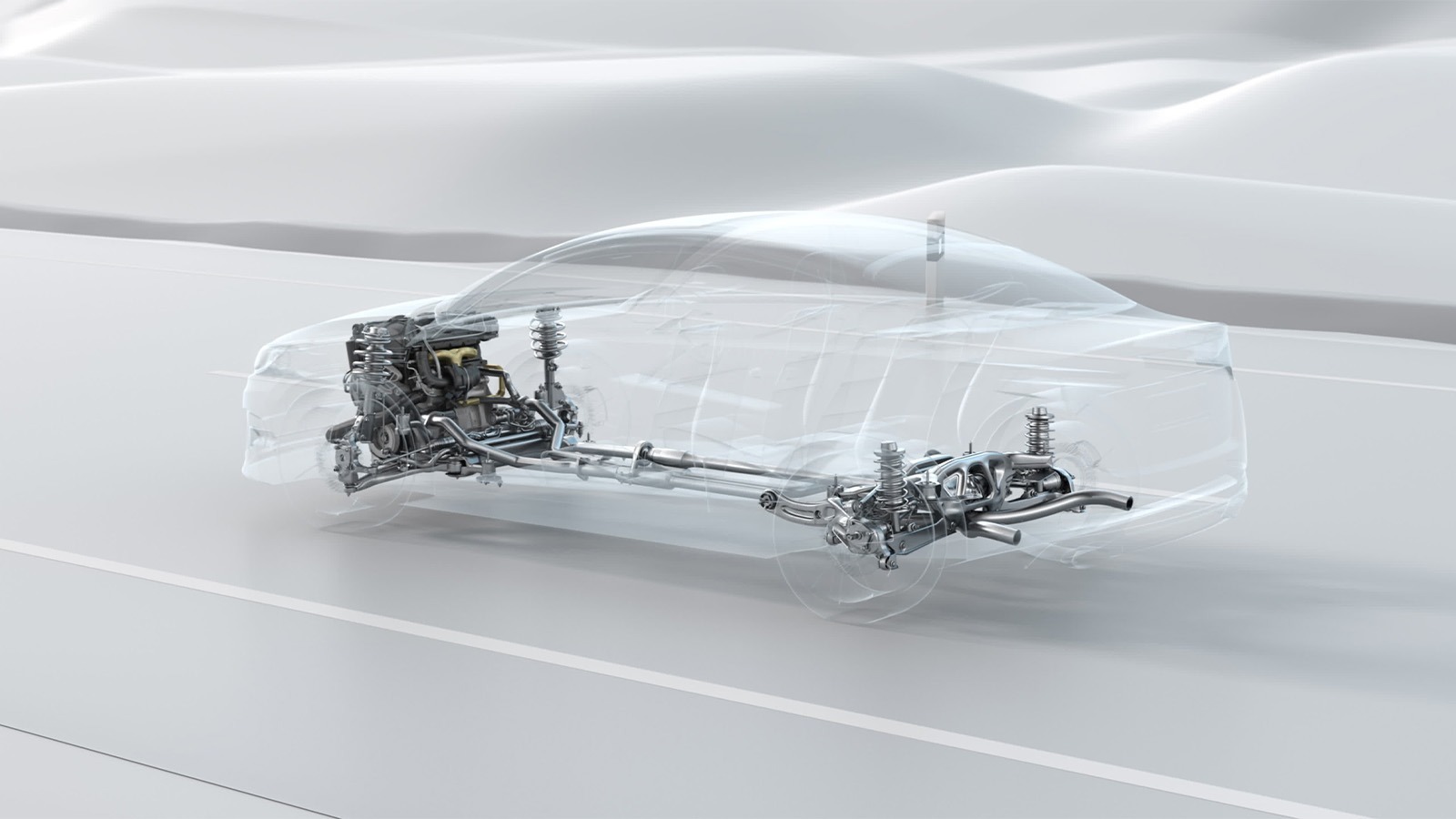
Electrification is reshaping vehicle architecture, but most OEMs must still deliver profitable ICE derivatives alongside new EV programmes. Developing separate platforms for each propulsion type increases cost, complexity and development risk.
Contechs addresses this challenge through a propulsion-neutral platform development methodology. The approach enables ICE and electrified derivatives to be engineered simultaneously from a single modular vehicle architecture.
Early in development, critical structural hardpoints such as the front axle centreline, H-point, suspension nodes and primary load paths are defined using parallel ICE and EV packaging studies. By stabilising these references early, the vehicle architecture can support multiple propulsion strategies without structural compromise.
A parametric master CAD model governs the platform through controlled configuration management, ensuring geometric consistency across all derivatives. The architecture is then divided into high-commonality core modules, including the occupant cell, crash structure and suspension architecture, alongside adaptable modules such as underfloor systems, rear structures and propulsion mounting systems.
This methodology is underpinned by Contechs’ ongoing R&D investment and specialist engineering capability. Experienced design, CAE and systems engineers work in unison, combining advanced digital tools with real-world programme knowledge to translate complex architecture decisions into executable vehicle solutions.
Contechs’ engineering approach combines this modular platform strategy with advanced digital simulation and AI-assisted optimisation. Crash performance, stiffness, durability and battery integration are evaluated in parallel, allowing structural decisions to be validated before geometry is finalised.
This forms part of Contechs’ platform development IP, enabling scalable vehicle architectures that support both ICE and electrified derivatives.
For clients, the result is a more efficient transition to electrification, delivering high structural commonality, reduced tooling duplication and vehicle architectures capable of evolving with future propulsion strategies.
This is part of a wider Contechs focus on propulsion-neutral platform development. Future articles will explore this methodology in greater depth, alongside the innovations and engineering advances driving the next generation of vehicle architectures.